
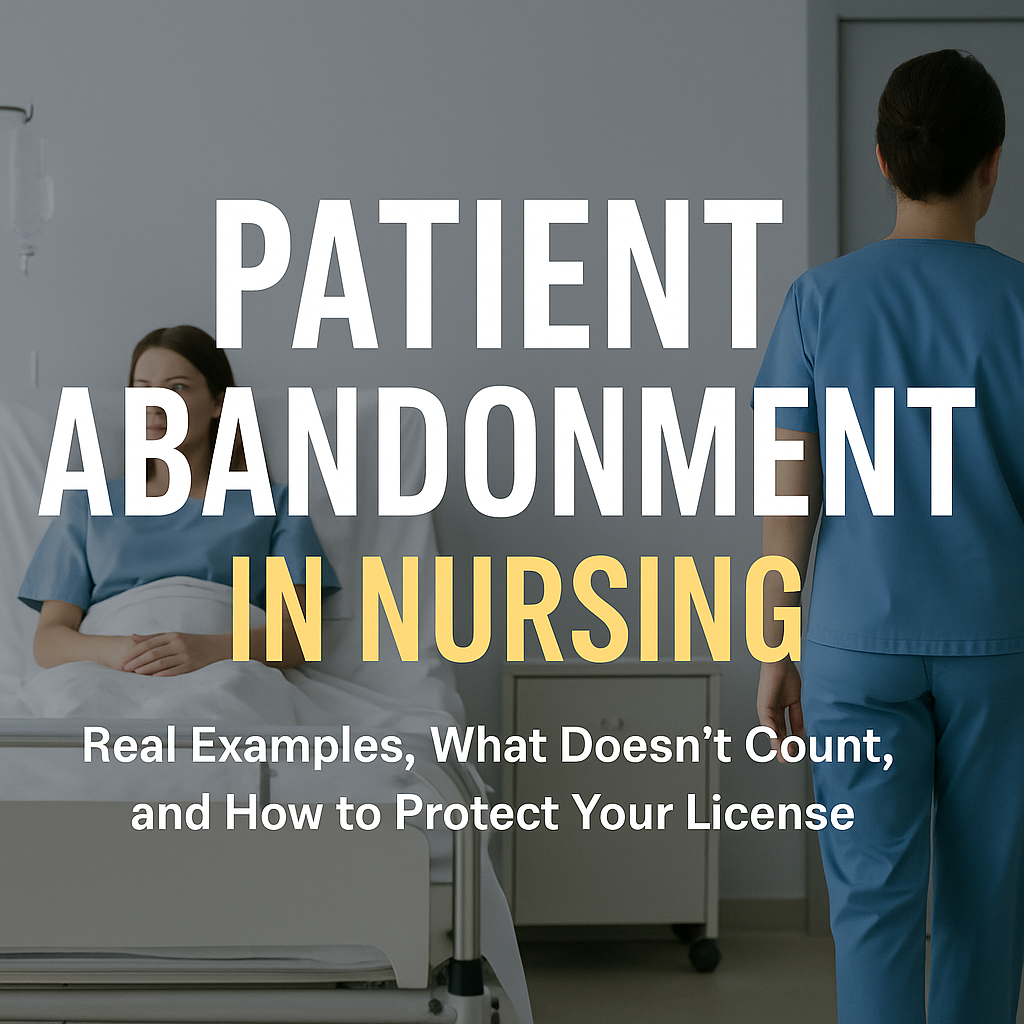
If you’ve ever wondered what patient abandonment really means, or if it’s something you could face as a nurse, you’re in the right place. It’s a serious issue, one that can have significant consequences for both nurses and patients. But don’t worry, we’re here to break it down and make it easier to understand.
This article will guide you through what patient abandonment in nursing is, how it happens, and why it’s so important. Whether you’re a nurse trying to stay on the right side of the law, a student learning about nursing ethics, or someone curious about healthcare issues, this guide will clear things up.
What is Patient Abandonment in Nursing?
Patient abandonment occurs when a nurse starts caring for a patient and then leaves that patient without ensuring someone else will continue that care. In simple terms, if a nurse leaves and doesn’t arrange for another healthcare provider to step in, it can be considered abandonment.
It’s not just about physically walking out of a room or a hospital. It’s about leaving a patient in a vulnerable position without proper care. That’s where the problem lies.
You may be wondering, “What’s the big deal? I was just overwhelmed, or the situation was too much for me.” It’s understandable, nursing is demanding, and sometimes things happen that can make it hard to finish your shift. But patient abandonment isn’t about intention. It’s about continuity of care and patient safety.
So, why does patient abandonment matter, and why is it such a big deal? Well, when care is suddenly withdrawn, the patient is at risk. It doesn’t matter if the nurse’s intentions were good. What matters is the outcome. Without care, the patient could suffer serious harm. That’s why the law and professional boards are so strict about abandonment.
In the next section, we’ll dig into what exactly constitutes patient abandonment in nursing. So you’ll know where to draw the line between a tough situation and something that crosses the line into abandonment.
What is Considered Patient Abandonment in Nursing?
So, what exactly counts as patient abandonment in nursing? What actions make a nurse liable, and where’s the line between a difficult shift and a genuine case of abandonment?
Here’s the deal: for something to be considered abandonment, there are a few key elements to consider. Let’s walk through them.
1. Nurse–Patient Relationship Must Be Established
First, a nurse–patient relationship needs to be in place. You can’t abandon someone you haven’t accepted responsibility for. In most cases, this happens when you agree to take care of a patient, either as part of your shift or in an emergency.
Think of it this way: you’ve been assigned a patient, you’ve started providing care, and you’ve begun your duties. At that point, you’ve entered into a relationship with that patient. From here on out, you are responsible for ensuring they get proper care.
2. The Nurse Must Leave or Withdraw Care
The next part is when you actually leave or withdraw care. This is where things get tricky. If you’re physically present with a patient but fail to act (for example, neglecting your duties or ignoring your responsibilities), that can still be considered abandonment.
It’s not always about walking out the door. Sometimes, abandonment happens when a nurse:
- Refuses care after accepting an assignment.
- Leaves without giving proper handoff to another nurse.
- Fails to follow up on critical patient needs or instructions.
Abandonment occurs when there’s no one else to take over and provide the care the patient needs.
3. The Patient Must Be at Risk Because of the Absence of Care
Finally, for something to be legally considered abandonment, there must be a risk to the patient. If you leave and the patient is left without proper care, that’s where abandonment becomes an issue.
For example, if you’re assigned a patient with critical needs, walking away without handing off care can put them at serious risk of harm. Whether it’s missing medication, leaving a patient who’s unstable, or not following through on a treatment plan, these are risks that can lead to harm.
What’s Not Considered Abandonment?
Not every situation where a nurse leaves is considered abandonment. For instance:
- When a nurse asks for help or transfers care properly – like during a shift change.
- When the nurse isn’t responsible for the patient at the start – for example, when a nurse refuses to take on an unsafe assignment before accepting it.
- When there’s a sudden, unavoidable emergency that requires leaving the patient temporarily but care is resumed as soon as possible.
So, just because you’re leaving doesn’t mean you’re abandoning a patient. It’s about how and when care is left, and whether the patient is left in harm’s way.
Patient Abandonment Nursing Examples
Understanding the definition of patient abandonment is helpful, but seeing how it plays out in real situations makes everything clearer. The examples below show how patient abandonment in nursing is evaluated in practice, not just in theory.
Each scenario reflects situations that commonly appear in board reviews, workplace investigations, and legal cases. Some are obvious. Others fall into gray areas that often confuse nurses, patients, and even employers. As you read through them, focus less on intent and more on continuity of care and patient risk — that’s what matters most in these cases.
Examples of Patient Abandonment Related to Leaving a Shift
This subsection targets one of the most searched and most misunderstood areas of patient abandonment. It also aligns closely with licensing board language.
We’ll cover 4 examples here.
Example 1: Leaving Mid-Shift Without Notifying Anyone
Scenario:
You are halfway through your shift and feel overwhelmed. Staffing is short, and the unit is chaotic. Without notifying a supervisor or arranging coverage, you leave the unit and go home.
Why this may be considered patient abandonment:
You accepted responsibility for your patients and then left without ensuring continued care. This creates a gap in care and places patients at risk.
Example 2: Leaving When Your Replacement Has Not Arrived
Scenario:
Your shift ends, but the next nurse has not arrived. You wait briefly, then leave because you are off the clock, even though no one has formally taken over your patients.
Why this may be considered patient abandonment:
Until another qualified nurse accepts the assignment, responsibility still rests with you. Leaving before coverage arrives can interrupt care.
Example 3: Walking Out After a Disagreement With Management
Scenario:
You argue with a supervisor about staffing levels or patient assignments. Frustrated, you decide to leave the unit immediately without transferring care.
Why this may be considered patient abandonment:
Personal conflict does not remove your duty to the patient. Leaving without a handoff exposes patients to harm.
Example 4: Leaving Early Due to Fatigue Without Escalation
Scenario:
You feel exhausted and unsafe to continue working. Instead of escalating the concern to leadership, you leave early without arranging coverage.
Why this may be considered patient abandonment:
Even valid concerns must be communicated and managed through proper channels. Leaving without notice or replacement can still put patients at risk.
Examples of Patient Abandonment Related to Refusing or Withdrawing Care
This set of patient abandonment nursing examples focuses on situations where care is refused or stopped after responsibility has already been accepted. These cases often confuse people because they feel justified in the moment — but they can still cross the line.
We’ll cover 4 examples here.
Example 5: Refusing to Care for a Patient After Accepting the Assignment
Scenario:
You accept a patient assignment at the start of your shift. After reviewing the workload, you decide the assignment is unsafe and refuse to provide care without formally transferring responsibility.
Why this may be considered patient abandonment:
Once you accept an assignment, responsibility begins. Refusing care without arranging coverage or escalating the concern properly can leave the patient without care.
Example 6: Withdrawing Care Because a Patient Is Difficult or Noncompliant
Scenario:
A patient is verbally abusive, refuses treatment, or repeatedly ignores instructions. Frustrated, you stop engaging with the patient and avoid providing care.
Why this may be considered patient abandonment:
Patient behavior does not remove your duty once care has started. Withdrawing care without a handoff or support plan places the patient at risk.
Example 7: Refusing Care Due to Personal or Moral Disagreement
Scenario:
You disagree with a patient’s lifestyle, diagnosis, or treatment plan. Instead of requesting reassignment through proper channels, you stop providing care.
Why this may be considered patient abandonment:
Personal beliefs do not override professional responsibility. Care must continue until another qualified provider formally takes over.
Example 8: Stopping Care Without Notifying the Team
Scenario:
You decide you can no longer care for a patient due to stress or emotional exhaustion. You step away without telling your supervisor or arranging coverage.
Why this may be considered patient abandonment:
Even valid emotional or mental health concerns must be communicated. Leaving silently creates a dangerous gap in care.
Examples of Patient Abandonment Involving Poor or No Handoffs
Handoffs are one of the most common places where patient abandonment in nursing issues arise. Care doesn’t stop when a shift ends — it transfers. When that transfer breaks down, patients can be left unprotected.
Here are 3 patient abandonment nursing examples tied specifically to poor or missing handoffs.
Example 9: Leaving Without Giving Any Report
Scenario:
Your shift ends, and you leave without giving report to the oncoming nurse. You assume they can read the chart and figure things out.
Why this may be considered patient abandonment:
A chart does not replace verbal handoff. Without key updates, critical information can be missed, placing the patient at risk.
Example 10: Giving an Incomplete or Rushed Handoff
Scenario:
You give a quick report but leave out important details, such as changes in condition, pending labs, or safety concerns, because you’re in a hurry to leave.
Why this may be considered patient abandonment:
An incomplete handoff can be just as dangerous as no handoff at all. The next nurse cannot safely care for the patient without full information.
Example 11: Leaving Before the Next Nurse Accepts the Assignment
Scenario:
You finish your report, but the incoming nurse hasn’t formally accepted the assignment yet. You leave anyway, assuming coverage is implied.
Why this may be considered patient abandonment:
Responsibility does not transfer until the next nurse accepts care. Leaving early can create a gap where no one is accountable.
Examples of Patient Abandonment Involving High-Risk or Critical Patients
These patient abandonment nursing examples involve patients who require continuous monitoring, rapid response, or time-sensitive care. In these situations, even a short gap in care can have serious consequences.
We’ll cover 2 examples here.
Example 12: Leaving an Unstable Patient Without Coverage
Scenario:
You are caring for a patient whose condition is unstable. Vital signs are fluctuating, and close monitoring is required. You step away from the unit without arranging for another nurse to take over.
Why this may be considered patient abandonment:
High-risk patients depend on continuous assessment. Leaving without coverage creates immediate danger and interrupts essential care.
Example 13: Leaving During Active Monitoring or Treatment
Scenario:
A patient is receiving active treatment, such as a transfusion, infusion, or frequent neurological checks. You leave before the treatment is completed and do not hand off responsibility.
Why this may be considered patient abandonment:
Active treatments require supervision. Leaving mid-process without transferring responsibility can directly harm the patient.
Gray-Area Patient Abandonment Nursing Examples (Commonly Misunderstood)
Not every difficult situation is clear-cut. These patient abandonment nursing examples fall into gray areas where people often disagree — including nurses, managers, and even patients. This is where context, communication, and documentation matter most.
We’ll cover 2 examples here.
Example 14: Leaving Due to Sudden Illness Without Escalation
Scenario:
You become suddenly ill during your shift — dizzy, nauseated, or unable to continue safely. You leave the unit quickly without notifying a supervisor or ensuring another nurse takes over.
Why this may be considered patient abandonment:
Being ill is valid. Leaving without communication or coverage is the problem. Patients are still left without care, even if the reason for leaving is understandable.
Example 15: Leaving Because of Unsafe Staffing After Accepting Care
Scenario:
You accept a patient assignment despite unsafe staffing levels. After realizing how unsafe the situation is, you leave the unit without arranging alternative coverage.
Why this may be considered patient abandonment:
Unsafe staffing should be addressed before accepting responsibility. Leaving after care has begun can still place patients at risk.
Legal Consequences of Patient Abandonment in Nursing
When it comes to patient abandonment, the consequences can be more than just a professional setback. Legal issues can arise, and nurses can face serious repercussions if they’re found guilty of abandoning a patient.
Let’s break down what could happen legally if abandonment is proven.
1. Disciplinary Action by the Nursing Board
One of the first places a nurse may face consequences is from their state nursing board. Nursing boards take patient abandonment seriously. If a nurse is found guilty, they could face:
- Suspension of their nursing license.
- Revocation of their license in severe cases.
- Probation or additional oversight if they’re allowed to continue practicing.
State boards are responsible for protecting patient safety, and when a nurse abandons a patient, they have a duty to step in and take action.
2. Civil Lawsuits and Financial Penalties
In addition to disciplinary actions, a nurse could face a civil lawsuit from the patient or their family. If the patient is harmed due to abandonment, the nurse (and potentially their employer) could be held financially liable for:
- Medical bills caused by lack of care.
- Pain and suffering due to delayed treatment.
- Loss of income if the patient’s condition worsens because of abandonment.
Lawsuits can result in significant financial penalties and long-term damage to a nurse’s career.
3. Criminal Charges in Severe Cases
In the most extreme cases, criminal charges may be brought against a nurse. This usually happens when abandonment leads to severe harm or death. The charges could range from negligence to reckless endangerment.
Though criminal charges are rare, they’re possible if the situation meets certain criteria, like deliberate harm or gross negligence. In these cases, the nurse could face:
- Jail time.
- Heavy fines.
- Permanent damage to their professional record.
4. Impact on the Healthcare Facility
If patient abandonment occurs, it doesn’t just affect the nurse only the healthcare facility can be held liable as well. Hospitals, nursing homes, and clinics can face:
- Malpractice lawsuits.
- Fines from regulatory bodies.
- Damage to their reputation, which can affect future patients and staff.
Healthcare providers have a responsibility to ensure they have enough staff and proper systems in place to prevent situations that could lead to patient abandonment. If they fail, they can be legally liable, along with the nurse involved.
Why Understanding Legal Consequences Matters
Understanding the legal consequences of patient abandonment is crucial for nurses. It’s not just about following policies, it’s about ensuring that patients receive the care they need and protecting your career and reputation in the process.
Now let’ssssssssssssss look at how nurses can report patient abandonment and protect themselves if they ever find themselves in a tough situation. Let me know when you’re ready to move on!
How to Report Patient Abandonment
If you find yourself in a situation where patient abandonment might occur, or if you’re a witness to it, it’s crucial to know how to properly report it. Reporting is not only an ethical responsibility but also protects both the patient and the nurse from further harm.
Here’s a simple, step-by-step guide on how to report patient abandonment:
1. Speak Up Immediately
If you’re a nurse and you notice that another nurse is abandoning their post or leaving a patient without a handoff, don’t stay silent. Speak up as soon as possible, either to the nurse in question or to a supervisor.
Reporting early ensures that a patient is never left in a dangerous situation, and it allows for immediate action to be taken.
2. Notify Your Supervisor or Manager
If you’re the one facing a potential abandonment situation — maybe you’re overwhelmed or need to leave unexpectedly — immediately notify your supervisor or manager.
- Document the situation: Clearly explain why you’re leaving or why you feel you can’t continue providing care.
- Arrange for a proper handoff: If possible, transfer care to another qualified nurse. If not, make sure the supervisor knows the urgency of the situation.
Your supervisor will guide the next steps and help ensure that patient safety is maintained.
3. Report to the Nursing Board if Necessary
If patient abandonment has already occurred or you’re unsure how it will be handled, it might be necessary to report the situation to your state nursing board. Most states require nurses to report incidents that could harm patients or violate professional conduct.
Nursing boards will usually have a formal reporting process. This typically involves filling out a report, detailing the situation, and submitting it through their official channels. This may result in further investigation.
4. Involve Legal Counsel if Necessary
In some cases, especially if the situation is severe or there’s potential for legal action, consulting legal counsel may be a good idea. Lawyers specializing in healthcare or malpractice can offer advice on the best steps to take next and protect you from any potential legal ramifications.
They can help ensure that your side of the story is clearly understood and documented.
5. Keep Thorough Documentation
Documentation is key. Whether you’re reporting abandonment or simply managing a challenging situation, keeping a clear, written record of events is essential. This documentation will be crucial if there’s ever an investigation into the matter.
- Document the time, date, and circumstances of the abandonment.
- Include conversations or interactions with supervisors or other staff members.
- Record any actions taken to prevent or resolve the abandonment.
Having a solid paper trail can protect you in case of a dispute or investigation.
Why Reporting Is So Important
Reporting patient abandonment isn’t just about following the rules — it’s about protecting the patient. It’s about making sure care is never interrupted and that patients always have access to the treatment they need.
In some cases, failing to report abandonment could be seen as negligence. So, reporting the situation immediately is in everyone’s best interest: the patient, the nursing staff, and the healthcare facility.
How to Avoid Patient Abandonment in Nursing
No one wants to be in a situation where patient abandonment becomes a possibility. The good news is, there are clear steps you can take to prevent abandonment and protect both yourself and your patients. Let’s explore some best practices to ensure continuity of care and avoid abandonment scenarios.
1. Communicate Early and Often
Clear communication is one of the most important tools you have to prevent abandonment. Whether you’re struggling with a heavy workload or facing a personal emergency, talking to your team is key.
- Notify your supervisor if you feel overwhelmed or unable to continue providing care.
- Give thorough handoffs at shift changes, ensuring the next nurse is up to date on the patient’s condition and treatment.
- Use reports and notes to communicate patient needs effectively.
By being open about your situation, you’ll find that solutions can be found quickly. Teamwork is critical in preventing abandonment.
2. Ask for Help When Needed
If you’re feeling overburdened or stressed, don’t be afraid to ask for help. It’s better to ask for support early than to try to manage everything on your own and risk burnout or abandoning a patient.
- Request additional staffing if needed — most healthcare facilities can provide extra help when shifts are too busy.
- Delegate tasks where possible. Trust your team to support you when needed.
- Use breaks wisely — but always ensure you have coverage during those times.
Asking for help doesn’t mean you’re incapable; it shows that you’re committed to maintaining patient safety.
3. Know When It’s Time to Refuse an Assignment
Sometimes, you might be given an assignment that you simply can’t safely handle. In such cases, refuse the assignment — but do it in the right way.
- Explain your reasons clearly to your supervisor. It’s important to document any concerns you have, whether it’s a lack of resources, an unsafe patient load, or a situation that could lead to abandonment.
- Request a reassignment or ask for assistance in managing the assignment.
Nurses have the right to refuse unsafe assignments — and doing so in a professional, respectful manner ensures patient safety is never compromised.
4. Ensure Proper Handoffs
Handoffs are crucial to avoid patient abandonment. They ensure continuity of care, even when you leave or take a break.
- Be thorough in your handoff reports. Include patient history, current issues, medications, and any special needs.
- Be available for questions from the incoming nurse. Sometimes, a quick chat can clear up potential confusion and prevent any gaps in care.
Remember, handoffs aren’t just about passing on information; they’re about ensuring the patient’s care continues seamlessly.
5. Plan Ahead for Unexpected Situations
In life, unexpected situations will arise. Whether it’s an emergency at home, a sudden illness, or just a particularly stressful shift, it’s important to have a plan for how you’ll handle these moments without abandoning your patients.
- Have a backup plan in place with your team. You might not always be able to work out all the details in advance, but knowing who to reach out to can save time and reduce stress.
- Know your facility’s policies about leaving a shift early or needing to take immediate action. If the situation arises, follow the procedures to ensure someone else will take care of your patients.
Why These Steps Matter
By communicating effectively, asking for help when needed, and following proper procedures, you ensure that patient abandonment is never a risk. You help create a culture of collaboration and responsibility — one where patients are the top priority, and nurses feel supported in their roles.
Remember, prevention is always better than dealing with the aftermath of abandonment. These steps will help you manage the stress and challenges of nursing without ever compromising patient care.
Conclusion: Keeping Patient Care a Priority
Patient abandonment in nursing is a serious issue, but it’s something that can be prevented with the right knowledge, communication, and practices. By understanding what constitutes abandonment, knowing the legal consequences, and following clear procedures for reporting and avoiding abandonment, you can ensure that patient safety always comes first.
Remember:
- Communication is key: Always keep your team in the loop and don’t hesitate to ask for help when needed.
- Proper handoffs are crucial to avoid leaving patients in vulnerable situations.
- Know when to refuse unsafe assignments — your responsibility is to your patients’ well-being, not to an unrealistic workload.
- Planning ahead for unexpected situations ensures you’re never caught in a bind without options.
As a nurse, your role is vital in ensuring patients get the care they need, and by being proactive, you can prevent situations that may lead to patient abandonment. By working together, supporting one another, and always keeping patient care as the priority, we can help make sure abandonment never becomes a reality.
Stay informed, stay compassionate, and stay committed to your patients’ health and safety.
