
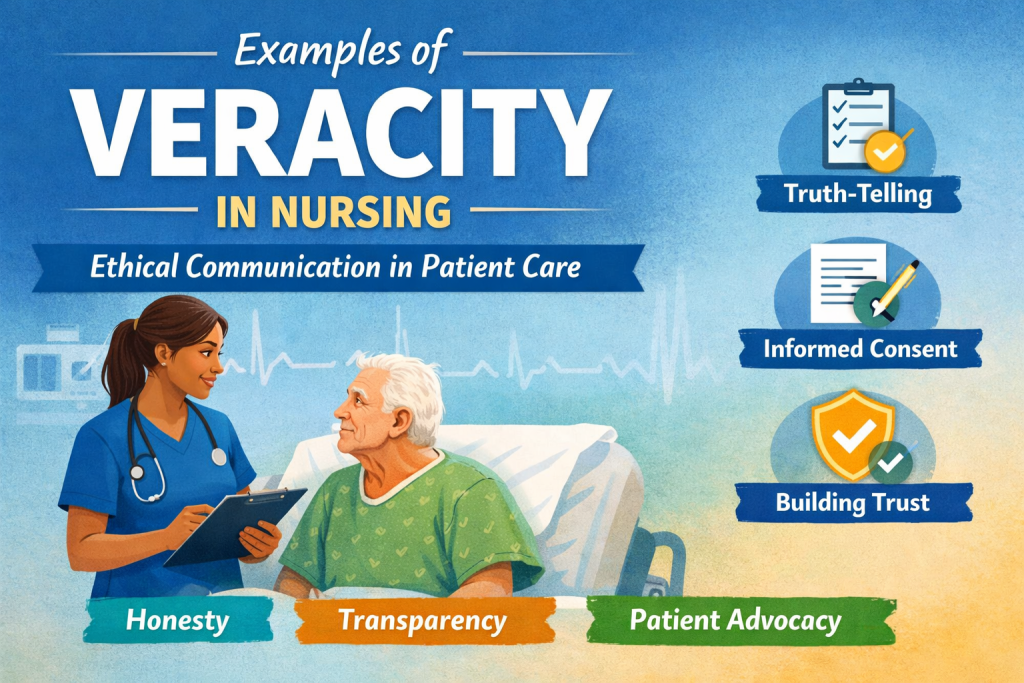
Veracity in nursing is a core principle that emphasizes truth-telling in patient care. It is essential for building trust, supporting patient autonomy, and ensuring safe healthcare practices.
Being truthful is not just about providing accurate information; it’s about ensuring that patients have all the information they need to make informed decisions about their health. Veracity helps foster a transparent nurse-patient relationship, where the patient feels confident in the care they are receiving.
In this article, we will explore the definition of veracity in nursing, why veracity is important in nursing, and provide practical examples of veracity in nursing to demonstrate how nurses can apply this principle in their everyday practice.
What is Veracity in Nursing?
Definition of Veracity in Nursing
Veracity means truth-telling. In the context of nursing, it involves providing patients with accurate, honest, and timely information.
This principle goes beyond simply being truthful—it is about making sure that the information shared is clear and understandable to the patient. Veracity ensures that patients can make informed decisions based on the facts about their diagnosis, treatment options, and risks.
It also builds trust. When patients know they are receiving truthful information, they are more likely to trust their healthcare providers and feel confident in their care decisions.
Why Veracity Matters in Nursing
Veracity is vital for several reasons:
- Supports patient autonomy: Informed decision-making is only possible when patients are provided with all relevant information. By being truthful, nurses allow patients to make decisions that align with their personal values and preferences.
- Builds trust: Trust is essential in any healthcare relationship. Patients are more likely to follow treatment plans, ask questions, and share concerns if they trust their nurse is being truthful and transparent.
- Ensures safety: Accurate information helps avoid harm. When patients are given the correct facts, they are better equipped to make decisions that prevent errors or adverse outcomes.
The Principle of Veracity in Nursing
Ethical Principle of Veracity
Veracity is an essential ethical principle in nursing. It is grounded in the idea that truth-telling is a fundamental responsibility of healthcare providers. Nurses must provide accurate, honest, and clear information to patients, ensuring that they understand their health conditions and the treatment options available to them.
Being truthful in nursing is not just about sharing facts—it is also about ensuring that the patient can trust the information they are being given. Nurses are ethically obligated to respect their patients’ right to know the truth, especially when it concerns their health and well-being.
The principle of veracity upholds the values of integrity and transparency within healthcare, which are essential for effective care delivery and maintaining professional trust.
Read more on ethical dilemmas in nursing
How Veracity Supports Patient Autonomy
Veracity directly supports patient autonomy by empowering patients to make decisions based on accurate information. When patients have all the relevant facts, they are in a better position to make informed decisions about their care.
For instance, when a nurse provides information about the benefits, risks, and alternatives of a treatment, they help the patient fully understand their options. This not only respects the patient’s autonomy but also reinforces their ability to make choices that are best suited to their personal values and preferences.
Informed decision-making is an important aspect of nursing practice, and veracity ensures that patients are given the tools they need to take an active role in their care.
Examples of Veracity in Nursing
1) Disclosing a Medication Error
If a medication error occurs, the nurse should inform the patient of what happened, what actions are being taken, and any potential impact. For example, a nurse might explain that a dose was missed or given incorrectly but assure the patient that steps are being taken to monitor the situation.
2) Near Miss (No Harm)
If a potential error is identified before it reaches the patient, the nurse should inform the patient that a problem was caught in time, ensuring them that no harm was done. This might involve a labeling issue or a miscommunication that was quickly corrected.
3) Informed Consent
When obtaining informed consent, the nurse should provide the patient with truthful, clear information about the procedure, risks, benefits, and alternatives. This ensures the patient can make an informed choice about their care.
4) Family Requests to Withhold Information
When a family member asks the nurse not to disclose certain information to a patient, the nurse should inform the family that while their wishes will be respected, the patient’s right to know will also be considered. The nurse may need to involve a provider or ethics team to balance these concerns.
5) Palliative/Hospice Communication
In palliative or hospice care, when discussing care options with patients and their families, the nurse should provide truthful information about the patient’s condition and focus on managing symptoms to maintain comfort.
6) Dementia/Cognitive Impairment
For patients with dementia or cognitive impairment, the nurse should be truthful in a compassionate manner, using validation techniques to address repeated questions or concerns while maintaining dignity.
7) Error by Another Team Member (Focus on Safety)
If an error by another team member is identified, the nurse should inform the patient that a mistake was discovered and corrective actions are being taken, ensuring that the patient understands the steps being followed to prevent harm.
8) Capacity and Surrogate Decision-Making
When a patient’s decision-making capacity is impaired, the nurse should ensure that the surrogate decision-maker is informed and involved in the care decisions. The nurse should always provide accurate information to the surrogate to maintain clarity in decision-making.
9) Communicating Delayed Lab Results
If lab results are delayed, the nurse should inform the patient about the delay and provide an updated time frame for when the results will be available.
10) Disclosing Risks of a Treatment
When discussing a treatment plan with a patient, the nurse should clearly explain the potential risks involved, ensuring the patient fully understands before proceeding with the treatment.
11) Sharing Information about a Chronic Condition
If a patient is diagnosed with a chronic condition, the nurse should explain the nature of the disease, its progression, and the long-term management plan to ensure the patient is well-informed about their condition.
12) Providing Information About a Clinical Trial
If a clinical trial is available to a patient, the nurse should provide full details about the trial, including the benefits, risks, and potential alternatives, to support the patient in making an informed decision about participation.
13) Explaining Side Effects of Medication
When prescribing new medications, the nurse should inform the patient about possible side effects and what to do if they experience any adverse reactions, helping the patient understand the treatment better.
14) Discussing a Change in Medication Plan
When there is a change in the medication regimen, the nurse should clearly explain the reason for the change and the expected benefits, ensuring that the patient is fully aware of what is being altered and why.
15) Informing About a Post-Surgery Complication
If a patient experiences a minor complication after surgery (like swelling or pain), the nurse should explain the issue in clear terms and outline the steps being taken to manage and resolve the complication.
16) Addressing Patient Concerns About Discharge
When a patient expresses concerns about being discharged, the nurse should explain the reasoning behind the discharge decision, provide discharge instructions, and reassure the patient about the follow-up plan to ensure they feel comfortable.
Fidelity vs Veracity in Nursing
Understanding Fidelity and Veracity
Fidelity and veracity are both fundamental ethical principles in nursing, but they have different focuses.
| Aspect | Fidelity | Veracity |
| Definition | Loyalty, faithfulness, and keeping promises to patients. | Truth-telling; providing accurate and honest information. |
| Focus | Commitment to the patient’s well-being and trust. | Honesty in communication with patients. |
| Key Responsibility | Fulfilling promises and maintaining trust in the nurse-patient relationship. | Providing truthful, clear, and transparent information to patients. |
| Examples | Following through on promises to follow up with a patient or providing consistent care. | Explaining treatment options and risks truthfully to the patient. |
| Ethical Link | Supports trust, commitment, and reliability. | Ensures informed decision-making and supports patient autonomy. |
| Goal | To demonstrate loyalty and uphold professional duties. | To empower patients through clear, truthful communication. |
| When Applied | Nurses show fidelity by keeping their word and being dependable. | Nurses apply veracity when discussing diagnoses, treatment plans, and risks. |
This table helps clarify the distinction between fidelity in nursing (loyalty and commitment) and veracity (truth-telling) in nursing practice, with examples and key points for each principle.
Veracity in Nursing Ethics
Veracity in Nursing Ethics
Veracity plays a central role in nursing ethics. It aligns closely with other fundamental ethical principles like beneficence (doing good), nonmaleficence (avoiding harm), and justice (fairness). Nurses are ethically obligated to be truthful with patients, as it enables them to make informed decisions about their care and well-being.
Veracity also ensures that patients have a clear understanding of their medical condition and the risks involved in their treatment options. This transparency is key to maintaining the patient’s trust and autonomy.
For example, when a nurse provides honest information about a diagnosis or treatment plan, it ensures that the patient can make a choice that is in their best interest, contributing to positive health outcomes. This truth-telling also reinforces the nurse’s role in advocating for the patient’s rights.
Ethical Dilemmas in Veracity
Despite its importance, veracity can lead to ethical dilemmas. For instance, when delivering news of a terminal diagnosis, a nurse may struggle with how much detail to provide, knowing that it might cause emotional distress.
One example of an ethical dilemma involving veracity is the use of therapeutic privilege. In rare cases, a healthcare provider might decide to withhold certain information temporarily if disclosing it could cause significant harm or distress to the patient. This decision should never be made unilaterally by the nurse but rather in collaboration with the healthcare team, including physicians and, in some cases, ethics committees.
Although therapeutic privilege can sometimes be ethically justified, it should always be used cautiously, and the situation must be revisited regularly to assess whether the information can now be shared.
Veracity in Nursing: When Withholding Information is Considered
Therapeutic Privilege
In certain situations, a healthcare provider may decide to withhold information from a patient, typically when disclosing it could result in significant harm or distress. This practice is known as therapeutic privilege.
Therapeutic privilege is extremely rare and should only be applied in specific cases, such as when telling the patient the truth might lead to immediate physical harm, psychological trauma, or compromise their well-being. It’s important to note that this decision should never be made unilaterally by the nurse alone.
If therapeutic privilege is used, it must always involve a team decision that includes healthcare providers, ethics committees, and, when appropriate, legal or family counsel. The situation should also be reviewed regularly to determine when the information can be disclosed.
For example, in cases of terminal illness, a nurse might delay fully explaining the prognosis, particularly if the patient is emotionally vulnerable, and might instead provide some information gradually. However, this approach should always be revisited, and the nurse must remain transparent as soon as the patient is ready to hear the truth.
Escalation Pathways for Uncertainty
When faced with uncertainty about whether to disclose information, it’s critical that nurses follow a clear escalation pathway:
- Consult with the provider: Discuss the situation with the physician or primary healthcare provider to determine the appropriate course of action.
- Involve the charge nurse: The charge nurse can provide additional guidance or escalate the matter further if necessary.
- Request an ethics consult: If unsure, requesting an ethics committee consult can help clarify how to handle the situation in accordance with ethical standards.
- Document the rationale: Always document the decision-making process, the rationale for withholding or delaying information, and the time frame for revisiting the issue.
By following this structured approach, nurses ensure that their actions remain within ethical and professional boundaries while prioritizing the patient’s best interests.
Communication Tools Nurses Can Use for Veracity
SPIKES-Lite for Difficult Truths
Delivering difficult truths, particularly in emotionally sensitive situations, requires careful consideration. The SPIKES-Lite tool is an efficient and structured approach that nurses can use to ensure difficult conversations are conducted with clarity and compassion.
Here’s how SPIKES-Lite works:
- S (Setup): Ensure you are in a private, quiet space with no interruptions. Sit down to create a more intimate and supportive atmosphere. Offer the patient a support person if needed.
- P (Perception): Start by assessing what the patient already knows. Ask them, “What have you been told so far?” This allows you to gauge their understanding and tailor the conversation accordingly.
- I (Invitation): Give the patient control over the conversation. Ask, “How much detail would you like about your diagnosis or treatment options?” This empowers the patient to decide how much information they are ready to process.
- K (Knowledge): Share the facts in small, manageable chunks. Use simple, non-technical language. If you must use medical terms, take the time to explain them in layman’s terms.
- E (Empathy): Acknowledge the patient’s emotional response. Saying, “I know this is difficult to hear,” helps the patient feel understood and supported.
- S (Strategy/Summary): Conclude by summarizing the next steps. For example, “We will monitor your condition closely and check in with you later today.” This gives the patient a clear idea of what to expect going forward.
Using this approach helps ensure that difficult news is delivered clearly, empathetically, and effectively.
Plain-Language Checklist
To ensure that the information you provide is understandable for the patient, use the Plain-Language Checklist. This ensures clear communication and helps prevent confusion.
- Use one idea per sentence. This keeps the message clear and to the point, avoiding complex, long-winded explanations.
- Avoid medical jargon. Instead, use simple language. For instance, say “high blood pressure” instead of “hypertension,” or explain the term if it must be used.
- Provide numbers in relatable terms. For example, instead of saying “10% chance,” say “1 in 10.” This makes the information easier to visualize and understand.
- Teach-back: Always confirm the patient’s understanding. After explaining something, ask them to explain it back to you in their own words to ensure clarity. For example, “Can you tell me what you understand about the treatment plan?”
By following this checklist, nurses can ensure that patients are not only given the facts but also truly understand them, which is critical for making informed healthcare decisions.
Summing It Up
Veracity is a foundational principle in nursing practice, ensuring that nurses provide truthful, accurate, and clear information to patients. This principle is essential for building trust, supporting patient autonomy, and promoting informed decision-making.
By practicing veracity, nurses contribute to better health outcomes and help patients feel respected and involved in their care. Whether disclosing a diagnosis, explaining a treatment plan, or addressing an error, veracity should be a priority in every nurse-patient interaction.
As nurses, it’s essential to embrace the principle of veracity in your daily practice. Ensure that every patient interaction is grounded in truthful and compassionate communication. Doing so will foster trust, support patient autonomy, and ultimately lead to better care and better patient outcomes.
FAQ Section: Quick Answers to Common Questions About Veracity in Nursing
What is Veracity in Nursing?
Veracity in nursing refers to the obligation of nurses to tell the truth in all aspects of patient care. It involves providing accurate, clear, and timely information, helping patients make informed decisions about their health and treatment options.
Why is Veracity Important in Nursing?
Veracity is crucial because it fosters trust between nurses and patients. It also supports patient autonomy by ensuring that patients have all the information they need to make decisions that align with their values. Being truthful helps patients feel respected and empowers them to take an active role in their care, leading to better health outcomes.
What is the Difference Between Fidelity and Veracity in Nursing?
Fidelity and veracity are both ethical principles, but they serve different purposes.
- Fidelity is about loyalty, keeping promises, and maintaining trust with the patient.
- Veracity is specifically about truth-telling—providing accurate and honest information to patients.
Both principles work together to create a trusting and transparent nurse-patient relationship. Fidelity ensures nurses are committed to their patients, while veracity ensures they provide truthful, clear communication.
Can Veracity Ever Be Withheld in Nursing?
In rare cases, veracity may be withheld through therapeutic privilege. This occurs when disclosing certain information could cause significant harm or distress to the patient. However, this should always involve a team decision, including consultation with the healthcare provider and ethics committees.
Therapeutic privilege is not a routine practice and should only be used after careful consideration. Nurses must revisit these situations regularly to assess when it’s appropriate to disclose the withheld information.
How Does Veracity Support Informed Consent?
Veracity is the cornerstone of the informed consent process. Informed consent requires that patients fully understand the risks, benefits, and alternatives of a treatment or procedure. Without truthful and accurate information, patients cannot make informed decisions about their care.
By practicing veracity, nurses ensure that patients are provided with all necessary information to make decisions that align with their values and preferences.
Are “White Lies” Acceptable with Dementia Patients?
In the case of patients with dementia, nurses should avoid telling “white lies”. Instead, nurses should focus on validation and redirection.
For instance, if a patient with dementia repeatedly asks for a deceased family member, it’s better to acknowledge the patient’s feelings, like saying, “I know you miss your loved one,” rather than offering false information. Redirection can also help ease distress, such as guiding the conversation to something comforting, like looking at family photos.
The goal is to provide comfort without distorting the truth.
